Two of the most talked-about brightening ingredients in Pakistani skincare right now are Niacinamide and Vitamin C. Both claim to fade dark spots. Both are marketed as brightening. Both are in seemingly every serum on the market. But they work completely differently — and using the wrong one for your skin type, or using them incorrectly together, will give you disappointing results.
This guide breaks down exactly how each ingredient works, which is better for Pakistani skin concerns, and how to use them.
How Vitamin C works on dark spots
Vitamin C (L-Ascorbic Acid) fights dark spots at the source: it inhibits the enzyme tyrosinase, which is responsible for triggering melanin production in response to UV exposure and skin trauma. Less tyrosinase activity means less melanin, which means fewer new dark spots forming while existing ones gradually fade.
Vitamin C is also a powerful antioxidant, which means it neutralises the free radical damage caused by UV radiation — one of the primary aging and pigmentation triggers in Pakistan’s high UV environment.
Best for: Sun-induced dark spots, overall dullness, environmental damage, antioxidant protection. Morning use.
Watch out for: Vitamin C is unstable — it oxidises with heat, light, and air. In Pakistan’s warm climate, poorly formulated Vitamin C serums go orange in the bottle and lose their efficacy quickly. Look for stable formulations or encapsulated Vitamin C.
How Niacinamide works on dark spots
Niacinamide (Vitamin B3) doesn’t stop melanin production — it stops melanin from reaching the surface. Specifically, it inhibits the transfer of melanosomes (melanin packets) from melanocytes (the cells that produce melanin) to keratinocytes (the skin cells you actually see). The result is that even if melanin is being produced, less of it shows up as visible dark spots on your skin.
Niacinamide also regulates sebum production, strengthens the skin barrier, and reduces inflammation — making it particularly useful for oily and acne-prone skin in Pakistan where breakouts frequently leave post-inflammatory hyperpigmentation marks.
Best for: Post-acne marks, oily and acne-prone skin, skin barrier repair, morning or evening use. Extremely well-tolerated by sensitive skin.
Which one is better for Pakistani skin?
The honest answer is that for most Pakistani skin concerns, you need both — they target pigmentation through different pathways and combining them gives you a more complete result than either alone.
That said, if you’re choosing one to start:
- Choose Vitamin C if your primary concern is sun-induced dark spots, dullness, and overall brightening. It’s especially powerful when used with SPF — Vitamin C’s antioxidant properties actually boost the effectiveness of sunscreen.
- Choose Niacinamide if your primary concern is post-acne marks, oily skin, large pores, or you have sensitive skin that reacts to stronger actives.
Can you use Vitamin C and Niacinamide together?
Yes. The old advice that you can’t layer these two ingredients was based on outdated research. At the concentrations used in modern skincare products, Vitamin C and Niacinamide work well together and don’t cause the niacin flush that was previously a concern.
The practical approach: use Vitamin C in the morning (it works best as daytime antioxidant protection) and Niacinamide in the evening, or use them in separate steps if combining.
The complete dark spot routine for Pakistani skin
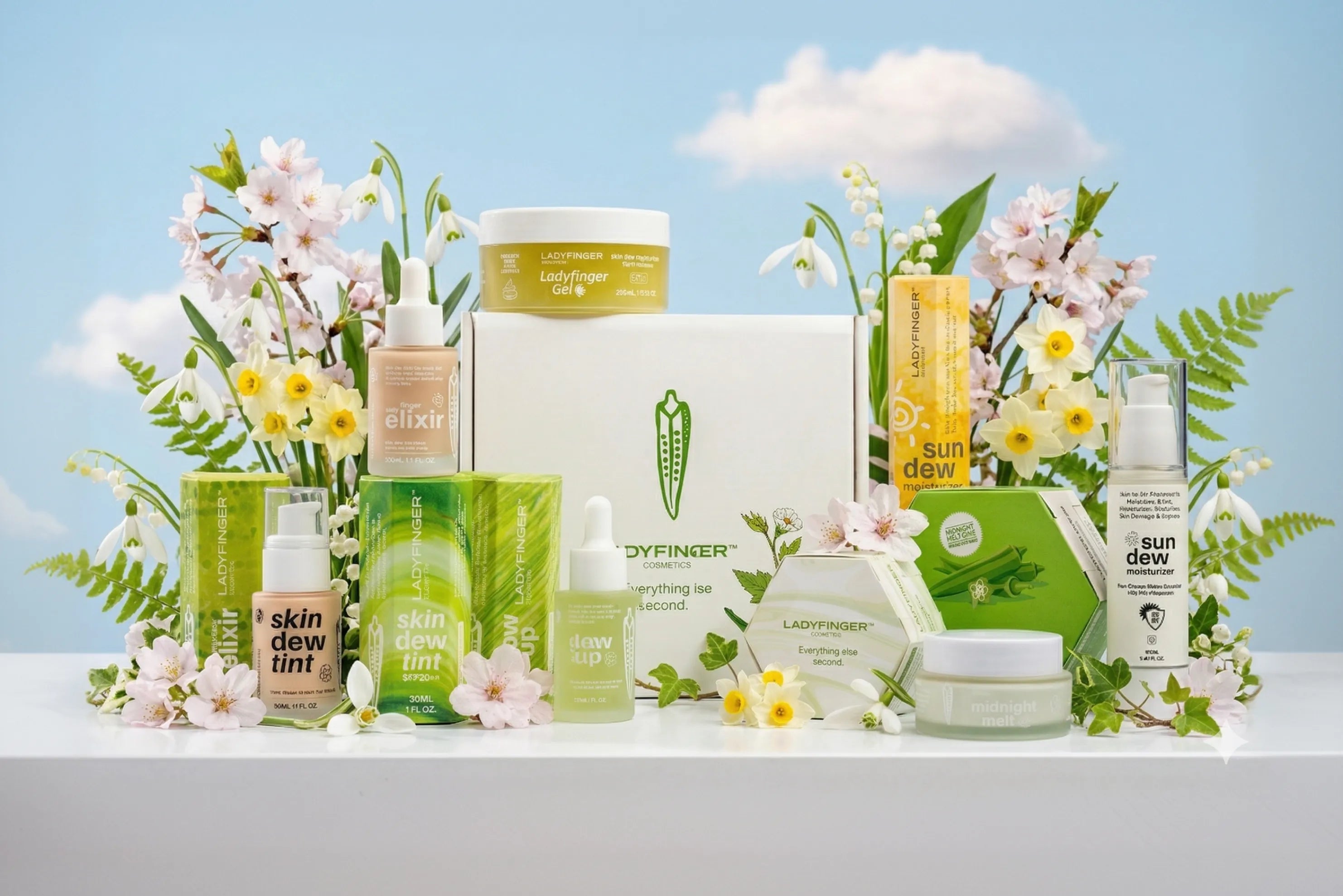
Morning: Glow Up Brightening Serum (Vitamin C) → Ladyfinger Gel → Sun Dew SPF 50
Night: Ladyfinger Gel → Midnight Melt (Alpha Arbutin dark spot correction)
This routine covers every angle of hyperpigmentation treatment: inhibiting new melanin (Vitamin C), blocking melanin transfer (routine-level Niacinamide), fading existing spots (Alpha Arbutin in Midnight Melt), protecting against UV triggers (SPF 50), and maintaining the barrier throughout (Ladyfinger Gel).
Shop the fix: Glow Up