Every skincare concern you have — oiliness, breakouts, dark spots, sensitivity, premature aging — is made significantly worse by a damaged skin barrier. And in Pakistan, the skin barrier takes a beating every single day: extreme UV, pollution, hard water, harsh products, and heat that constantly pushes it to its limits.
Understanding your skin barrier is the single most useful thing you can do for your skin. Everything else — the serums, the SPF, the night creams — works better when the barrier is healthy. And nothing works properly when it’s not.
What is the skin barrier?
The skin barrier, or stratum corneum, is the outermost layer of your skin. Think of it as a brick wall: skin cells are the bricks, and a mixture of lipids (ceramides, fatty acids, cholesterol) is the mortar holding them together. This wall keeps moisture in and irritants, bacteria, and UV damage out.
When the barrier is intact, skin feels soft, comfortable, and balanced. When it’s damaged, moisture escapes (causing dehydration), and irritants get in (causing sensitivity, breakouts, and inflammation).
How the barrier gets damaged in Pakistan
Harsh cleansers — the most common cause of barrier damage. Foaming cleansers with sulfates strip the barrier’s protective lipids with every wash. If your face feels tight after cleansing, your cleanser is damaging your barrier.
Over-exfoliation — AHAs, BHAs, and physical scrubs are useful when used correctly. Used too frequently (more than 2–3 times per week) they thin the barrier and leave skin vulnerable to everything.
Skipping moisturiser — especially common with oily skin in summer. Without a moisturiser, the barrier can’t retain water. The result is dehydrated-oily skin: greasy on the surface, thirsty underneath.
UV exposure without SPF — UV radiation doesn’t just cause dark spots. It actively degrades the barrier’s lipid structure, making it less effective at retaining moisture and keeping irritants out.
Hard water — Pakistan’s water supply in most cities is high in minerals that disrupt the skin’s pH and strip its protective layer with every wash.
Steroid-laced whitening creams — one of the most significant causes of barrier damage in the Pakistani skincare context. Long-term steroid use thins the skin irreversibly in some cases, causing chronic sensitivity and reactive skin.
Signs your skin barrier is damaged
- Skin feels tight, itchy, or uncomfortable after washing
- Redness or flushing that didn’t used to happen
- Products that used to be fine now sting or burn
- Oily skin with dry patches (dehydrated-oily combination)
- Breakouts that don’t respond to usual treatments
- Skin that never seems to absorb products properly
How to repair your skin barrier
Step 1: Simplify immediately. Remove actives, exfoliants, and anything new or potentially irritating. A damaged barrier needs to recover before it can tolerate treatments.
Step 2: Switch to a gentle cleanser. Milk cleansers or gentle gel cleansers that don’t strip. Water temperature lukewarm, not hot.
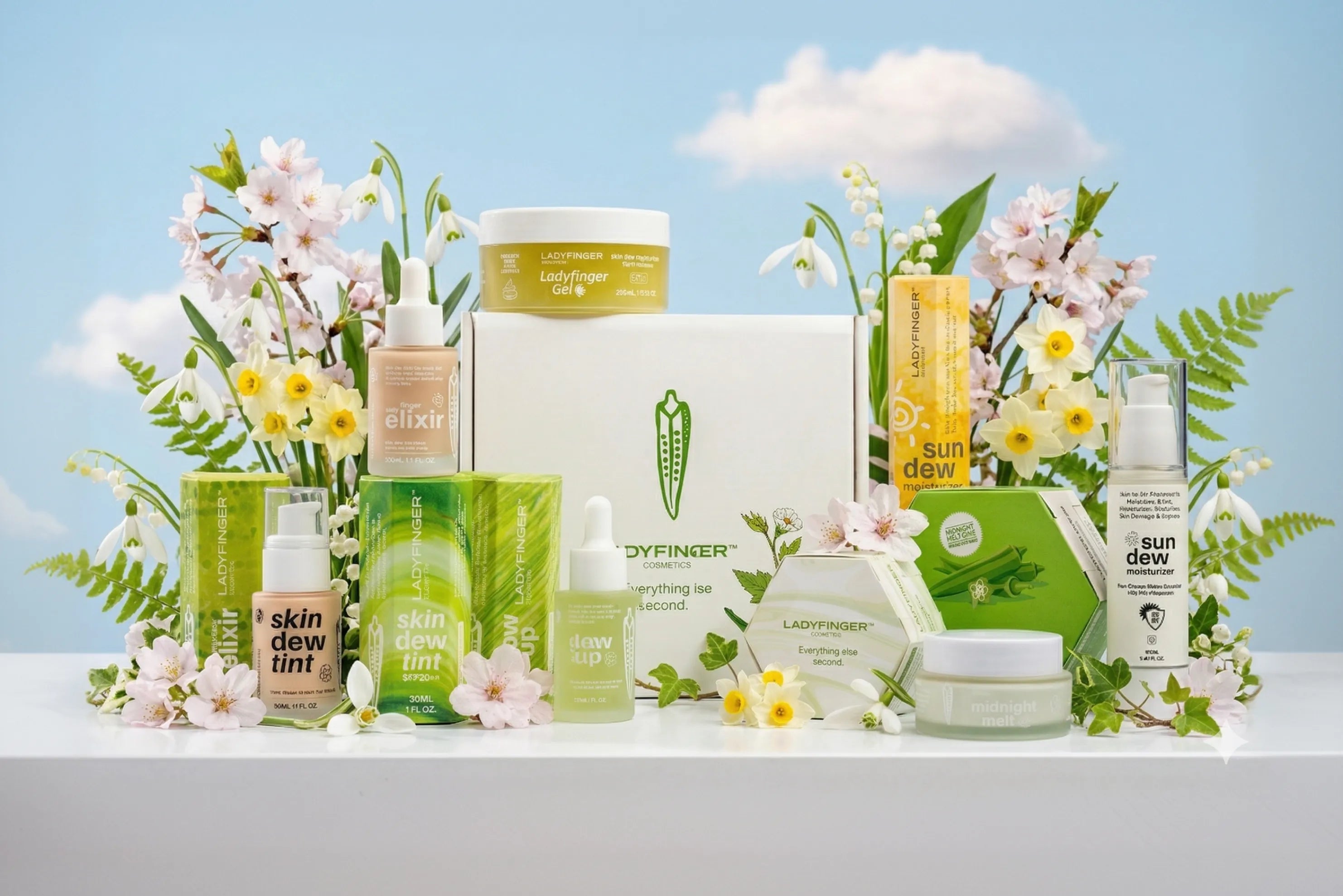
Step 3: Use a barrier-repairing hydrating gel. Ladyfinger Gel was designed specifically for barrier repair. Its water-based formula floods skin with hydration without adding oil or occlusive ingredients that can trigger breakouts. Apply morning and night after cleansing.
Step 4: Protect with SPF every morning. A damaged barrier is more vulnerable to UV. Sun Dew SPF 50 protects while being gentle enough not to aggravate sensitised skin.
Step 5: Add gentle overnight repair. Midnight Melt supports barrier repair overnight with Alpha Arbutin and hydrating actives that work during the skin’s natural repair cycle.
Give this protocol two weeks before reintroducing any actives. Most people see significant improvement in barrier function within 10–14 days of consistent, simplified care.
Maintaining a healthy barrier long-term
Once repaired, keeping your barrier healthy is about consistency: gentle cleansing, daily hydration, daily SPF, and not over-exfoliating. The Ladyfinger Gel as a daily baseline keeps the barrier topped up with moisture year-round — which in Pakistan’s climate is the single most protective thing you can do for your skin long-term.
Shop the fix: Ladyfinger Gel