Anti-aging skincare in Pakistan is full of noise. Expensive imported creams marketed for Western skin, harsh retinols that cause weeks of peeling, and a wellness industry that profits from your confusion. This guide cuts through all of it: here’s what actually works for Pakistani skin dealing with Pakistani aging triggers, and how to build a routine that delivers visible results without drama.
How aging looks different in Pakistan
Pakistani skin ages differently from European or East Asian skin, and most anti-aging advice ignores this completely. The primary aging drivers in Pakistan are:
UV damage — Pakistan’s UV index is extreme for most of the year. UV radiation is the single biggest cause of premature aging, breaking down collagen, creating pigmentation, and deepening fine lines at a rate that’s significantly faster than it would be in a milder climate. This is why so many Pakistani women in their 30s have sun damage that looks more like 40s skin in European women.
Pollution — Major Pakistani cities rank among the world’s most polluted. Fine particulate matter penetrates the skin, generates free radicals, and accelerates collagen breakdown and discolouration.
Water quality — Hard water in cities like Lahore and Karachi strips the skin’s natural oils and disrupts the barrier, leading to chronic dryness and sensitivity that ages skin faster.
Hormonal changes — Melasma and chhaiyan are extremely common in Pakistani women, particularly after pregnancy. These aren’t just dark spots — they’re signs of skin that’s been chronically sun-stressed.
The ingredients that actually work
Hyaluronic acid — The most important hydrating ingredient in anti-aging skincare. Draws water into the skin and holds it there, physically plumping fine lines and giving skin that bouncy, full quality associated with youth. Works at any age and has zero side effects.
Peptides — Short amino acid chains that signal your skin to produce collagen. Collagen production naturally declines from your mid-twenties, and peptides are one of the few topical ingredients clinically shown to stimulate its production. Results are gradual but cumulative — skin that’s consistently exposed to peptides is measurably firmer over time.
Alpha Arbutin — For Pakistani skin, where sun damage and hyperpigmentation are a major component of premature aging, a safe melanin-inhibiting ingredient is essential. Alpha Arbutin delivers this without the risks of hydroquinone.
Vitamin C — An antioxidant that neutralises free radical damage from UV and pollution exposure. In a Pakistani context, daily Vitamin C is essentially mandatory for anyone who goes outside.
SPF 50 — Not an active. Not glamorous. But if you took every anti-aging ingredient on this list and compared it to consistent daily SPF use, SPF wins. No anti-aging routine works without it.
The anti-aging routine for Pakistani skin
Morning:
- Gentle cleanser
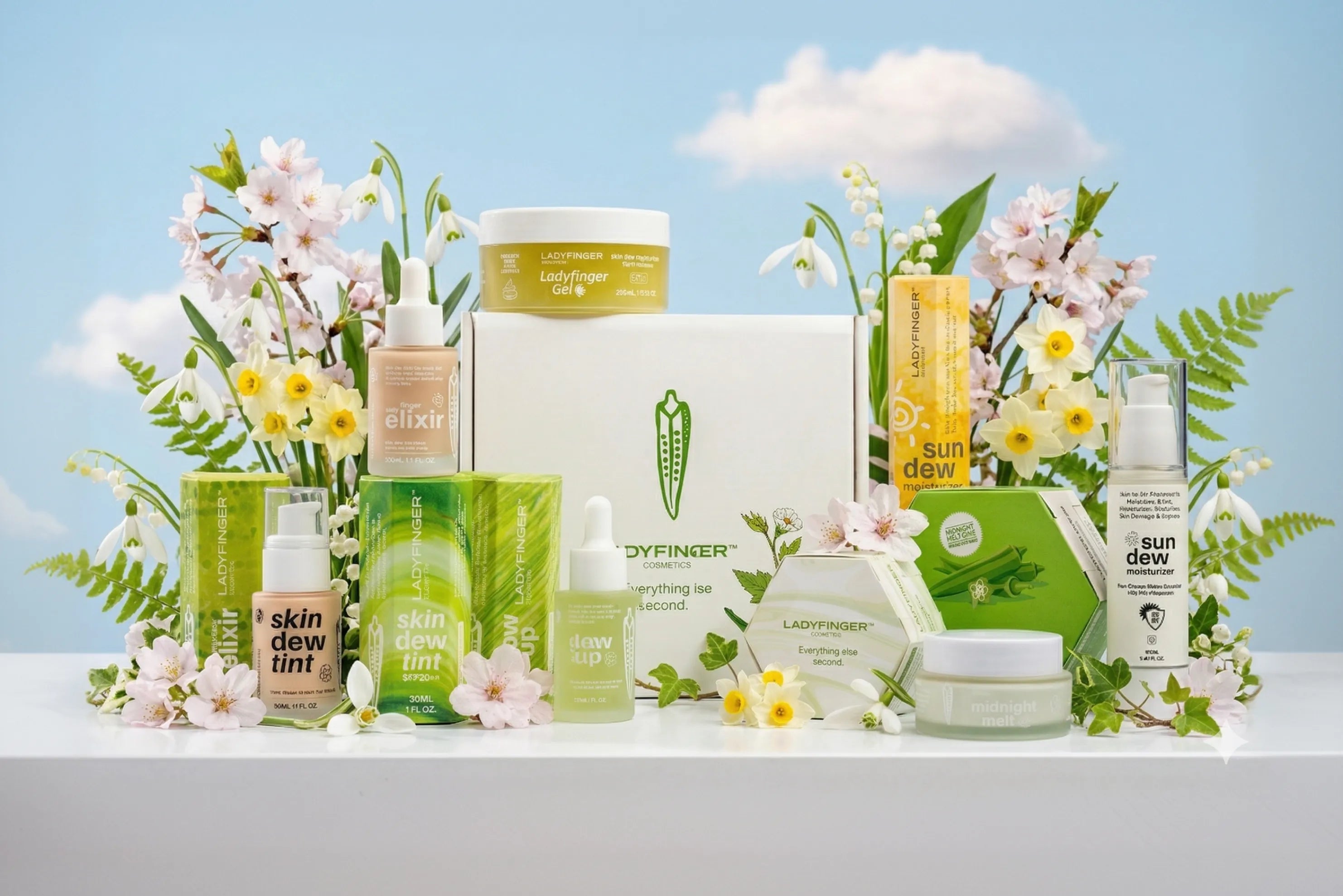
- Glow Up Brightening Serum — Vitamin C antioxidant protection and pigmentation correction
- Ladyfinger Elixir — hyaluronic acid and peptides for hydration and firming
- Sun Dew SPF 50 — non-negotiable broad spectrum protection
Evening:
- Gentle cleanser
- Ladyfinger Elixir — evening application maximises overnight absorption
- Midnight Melt Night Cream — dark spot correction and barrier repair overnight
When to start an anti-aging routine
The most common question: am I too young? The answer is no. The best time to start anti-aging skincare is before you see the signs — preventative care at 25 is far more effective than corrective care at 40. But corrective care at 40 still works. It’s never too late to improve your skin’s health.
Start with SPF and hyaluronic acid. Add Vitamin C. Add peptides. Build the routine gradually so your skin adapts. Consistency across months is worth more than the most expensive ingredient used sporadically.
What doesn’t work
Steroid-laced fairness creams — they thin the skin and cause rebound darkening. Harsh high-percentage retinol without professional guidance — the peeling and inflammation cause more damage than the retinol repairs for most skin types. Expensive imported serums formulated for European skin tones and mild climates — they weren’t designed for Pakistan’s UV levels and won’t perform the same way here.
Pakistani skin deserves Pakistani solutions. That’s what Ladyfinger Cosmetics was built for.
Shop the fix: The Advanced Youth Duo