Chhaiyan — the brownish, patchy pigmentation that appears on the cheeks, forehead, and upper lip — is one of the most common and most distressing skin concerns among Pakistani women. It’s a form of melasma, a type of hyperpigmentation triggered by a combination of UV exposure and hormonal changes, and it’s notoriously difficult to treat. This guide covers exactly what causes it, what doesn’t work, and what actually does.
What is melasma and why is it so common in Pakistan?
Melasma is a chronic skin condition where patches of skin produce excess melanin, resulting in brown or grey-brown discolouration on the face. It’s driven by two primary triggers that Pakistan has in abundance: UV radiation and hormonal fluctuations.
Pakistan’s extreme UV index means that even brief daily sun exposure constantly stimulates the melanocytes (melanin-producing cells) responsible for melasma patches. Once those cells are sensitised — by pregnancy, contraceptive pills, or hormonal changes — they remain in a hyperactive state that worsens every time UV hits them.
This is why melasma in Pakistan is so persistent: the environmental trigger (sun) is nearly impossible to avoid completely, and the hormonal component makes it a recurring issue rather than a one-time fix.
What doesn’t work for melasma
Steroid-based whitening creams — This is the most important thing to understand. The majority of melasma “treatments” sold in Pakistan — Fair & Lovely, local whitening creams, and prescription creams with steroids — cause temporary lightening by suppressing inflammation, not by treating the melanin overproduction itself. When you stop using them, the pigmentation returns darker than before. Long-term steroid use also thins the skin, making it more vulnerable to UV damage and more likely to develop new pigmentation.
Aggressive scrubs and exfoliants — Physical and chemical exfoliants cause inflammation. Inflammation is a primary trigger for melanin production in already-sensitised skin. Scrubbing melasma patches makes them worse, not better.
Single-ingredient solutions — Melasma responds best to a multi-angle approach. Using only one brightening ingredient rarely delivers lasting results.
What actually works for chhaiyan and melasma
Effective melasma treatment addresses three things simultaneously: blocking new melanin production, fading existing pigmentation, and protecting the skin from the UV triggers that restart the cycle.
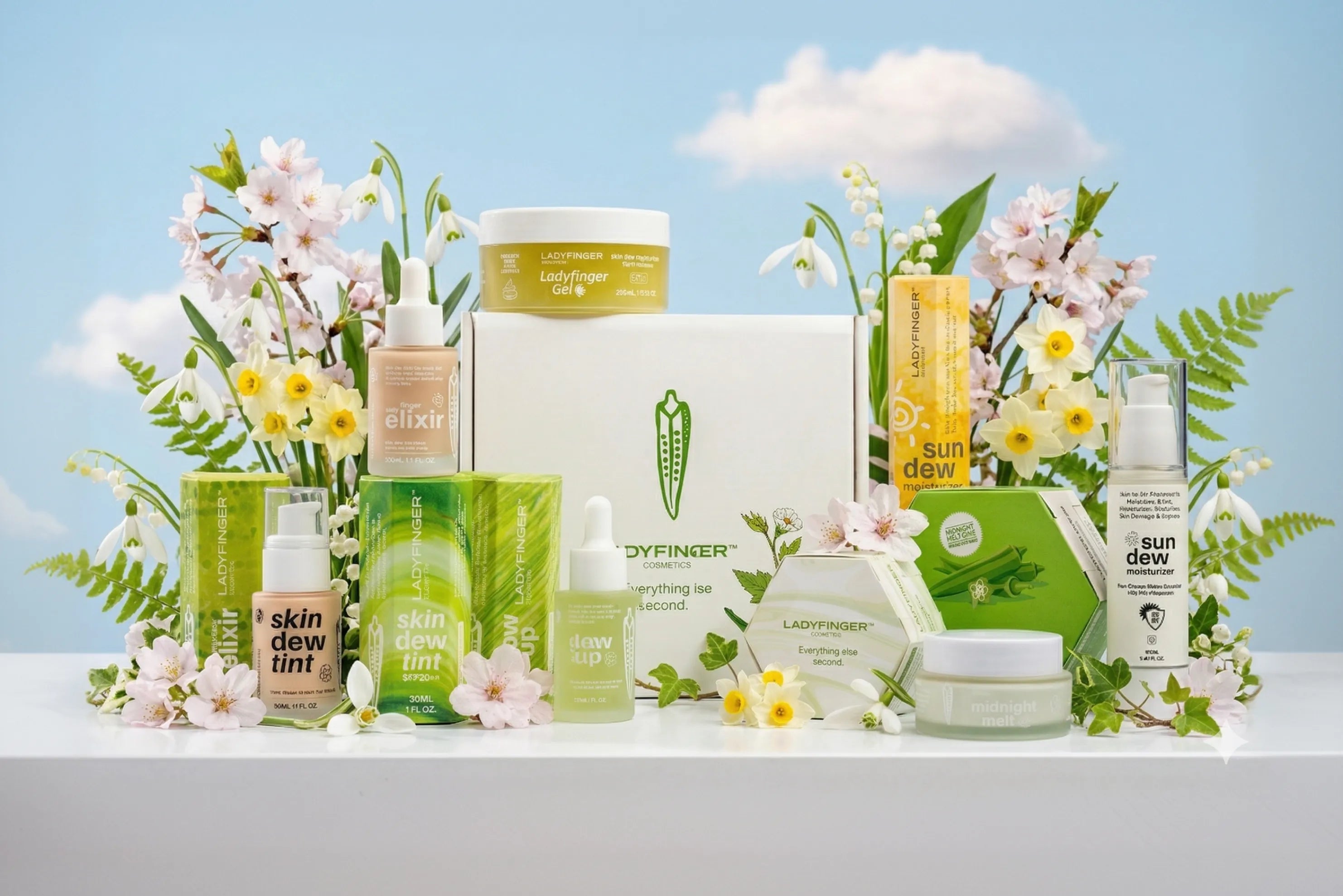
Alpha Arbutin — One of the safest and most effective melanin inhibitors available. Blocks tyrosinase (the enzyme that triggers melanin production) without the risks of hydroquinone. Central to Midnight Melt Night Cream, which delivers Alpha Arbutin overnight when skin absorption is at its peak.
Vitamin C — Antioxidant protection against UV-triggered melanin production, plus direct brightening through melanin synthesis inhibition. Glow Up Brightening Serum provides this in the morning where it offers dual-action protection and treatment.
SPF 50 — every single day — This is not optional for melasma. It’s 50% of the treatment. Without daily broad spectrum sun protection, every other step is undermined. UV exposure is the primary ongoing trigger — blocking it is the only way to stop the cycle. Sun Dew Moisturizer SPF 50, broad spectrum, non-comedogenic, no white cast.
The melasma treatment routine
Morning:
- Gentle cleanser
- Glow Up Brightening Serum (Vitamin C)
- Ladyfinger Gel (barrier hydration)
- Sun Dew SPF 50 — applied generously, reapplied if outdoors
Night:
- Gentle cleanser — double cleanse if wearing SPF
- Ladyfinger Gel
- Midnight Melt Night Cream (Alpha Arbutin treatment)
Additional measures: Wear a hat outdoors. Reapply SPF every 2–3 hours in sun. Avoid touching or scrubbing the affected areas.
How long does melasma treatment take?
Realistic expectations are important here. Melasma is a chronic condition, not an acute one. With consistent treatment (the routine above, every day, without missing SPF), most people see meaningful improvement in 8–12 weeks. The pigmentation may not disappear entirely — but it fades significantly and is much easier to control once the routine is established.
The most important thing is to not give up at week 4 because it’s “not working” — melanin turnover is slow. Give it 12 weeks of genuine consistency before evaluating.
When to see a dermatologist
Severe melasma, melasma that covers large areas, or pigmentation that doesn’t respond to 3 months of consistent treatment warrants a dermatologist visit. A dermatologist may prescribe tretinoin or azelaic acid alongside your routine for accelerated results. The routine above remains compatible with prescription treatments in most cases.
Shop the fix: Midnight Melt