If you have oily skin in Pakistan, sunscreen has probably always felt like the enemy. Heavy, greasy, pore-clogging formulas that make your face look shiny by 9am and break you out by noon. So you skip it. And then you deal with sun damage, dark spots, and premature aging that no brightening serum can fully undo.
Here’s the truth: the problem was never sunscreen. It was the wrong sunscreen. This guide covers exactly what to look for in a sunblock for oily skin in Pakistan, what to avoid, and how to wear SPF every day without looking or feeling greasy.
Why SPF is non-negotiable for oily skin in Pakistan
Pakistan’s UV index regularly hits extreme levels — 10 to 11 in most major cities during summer. UV radiation is the primary cause of hyperpigmentation, and oily skin is actually more susceptible to sun-induced dark spots because excess sebum creates an environment where UV damage accumulates faster.
If you’re using a brightening serum, a dark spot corrector, or any active ingredient and skipping SPF, you are working against yourself. UV rays will re-trigger the same melanin production you’re trying to suppress. SPF is the most important step in any skincare routine — but for oily skin, it has to be the right formula.
What makes a sunblock good for oily skin
Lightweight, water-based or gel formula — creamy, oil-based sunscreens sit on top of oily skin and make the problem worse. Look for gel-textured or fluid formulas that absorb quickly.
Non-comedogenic — this means it won’t clog pores. Essential for acne-prone and oily skin types. Always check the label.
Matte or satin finish — avoid sunscreens with a dewy or luminous finish if you’re oily. A matte finish controls shine and makes the SPF wearable all day.
No white cast — especially important for Pakistani and South Asian skin tones. Many mineral sunscreens leave a visible grey or white film. Look for formulas tested on darker skin tones.
SPF 50 minimum — in Pakistan’s UV environment, SPF 30 isn’t enough for daily outdoor use. SPF 50 broad spectrum is the baseline.
Broad spectrum — protects against both UVA (pigmentation, aging) and UVB (burning). If the bottle doesn’t say broad spectrum, it’s only doing half the job.
The sunblock for oily skin we recommend
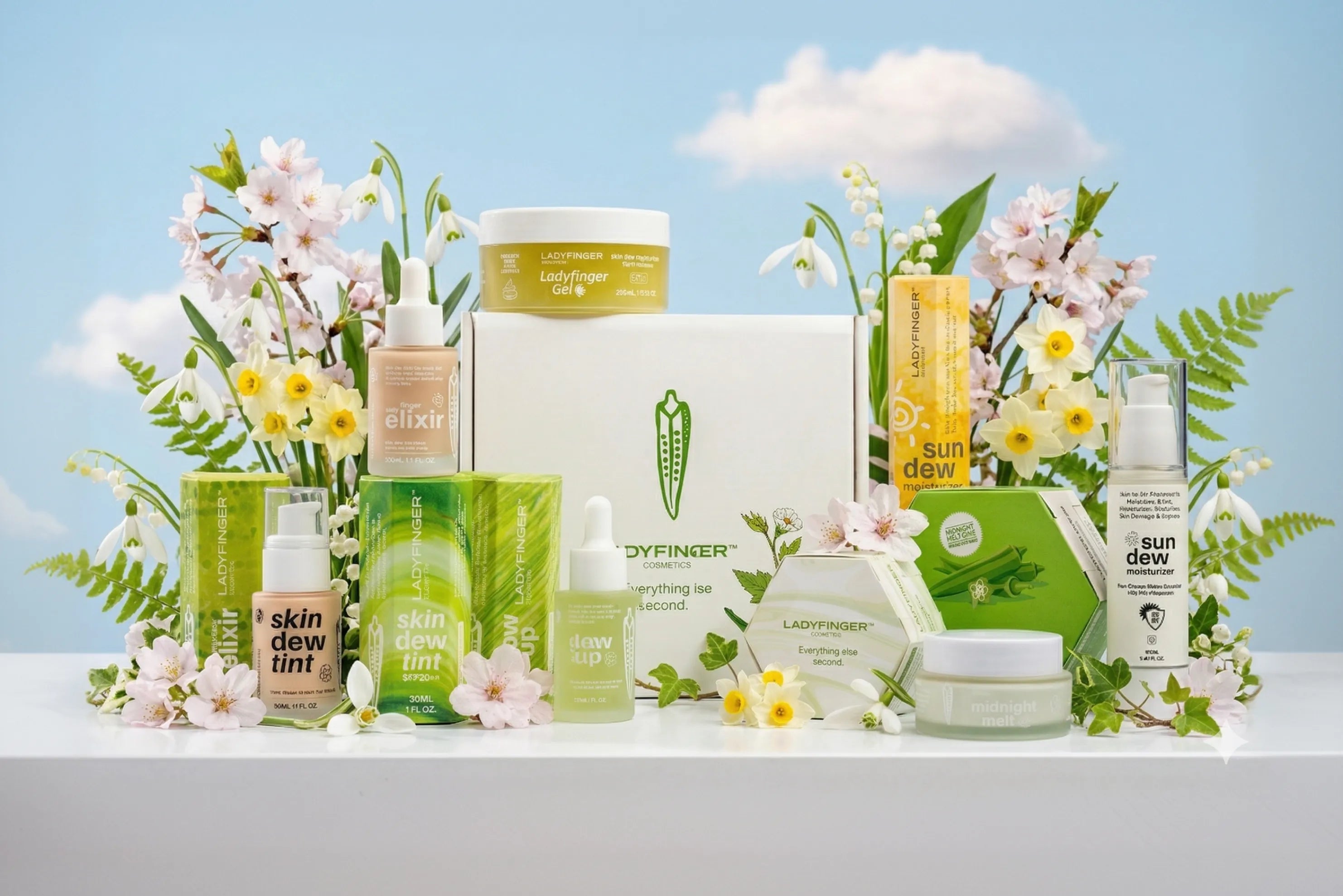
Sun Dew Moisturizer SPF 50 by Ladyfinger Cosmetics was built specifically for Pakistani skin in Pakistan’s climate. It’s lightweight and fluid, absorbs in seconds, leaves no white cast on medium to deep skin tones, and doesn’t pill under makeup or skin tint.
It’s broad spectrum SPF 50, non-comedogenic, and formulated to survive humidity and heat without breaking down or going greasy. For oily skin in Pakistan, this is the daily SPF that actually gets worn consistently — because it doesn’t feel like anything.
How to wear sunscreen correctly on oily skin
Use enough product. Under-application is the most common sunscreen mistake. Use at least a teaspoon for your face alone. Less product means significantly less protection, regardless of the SPF number.
Apply last in your skincare routine. After serum, gel, and moisturiser. Give each layer a minute to absorb before applying the next.
Reapply every 2–3 hours outdoors. SPF degrades with UV exposure, sweat, and touch. No sunscreen lasts all day with one application.
Don’t skip cloudy days. Up to 80% of UV rays penetrate cloud cover. Pakistan’s overcast monsoon days still require SPF.
The complete oily skin morning routine
- Gentle cleanser
- Glow Up brightening serum (if targeting dark spots)
- Ladyfinger Gel — lightweight hydration that controls sebum
- Sun Dew Moisturizer SPF 50
- Skin Dew Tint (optional, for a natural finish)
This routine takes under five minutes, protects against pigmentation and UV damage, and leaves oily skin looking balanced and glowy rather than shiny and greasy.
Bottom line
The best sunblock for oily skin in Pakistan is the one you’ll actually wear every day. That means lightweight, non-greasy, no white cast, and SPF 50 broad spectrum. Sun Dew Moisturizer SPF 50 was designed to be that sunscreen — the one that finally makes daily SPF feel like a non-issue rather than a chore.
Shop the fix: Sun Dew Moisturizer