Pakistan logs a UV Index of 10–12 for six months straight — April through September. UV Index 10+ is classified as "extreme" by the World Health Organization. Unprotected skin can begin to burn in as little as 10 minutes at midday.
Yet most people in Pakistan either skip sunscreen entirely or apply so little it makes no difference. This blog is about fixing both — and dismantling the myths that make people skip it.
What UV Radiation Actually Does to Pakistani Skin
Karachi, Lahore, Islamabad, Multan, Peshawar — every major Pakistani city sits at a latitude where summer UV is comparable to equatorial Africa. This isn't a "beach day only" situation. This is stepping outside to run an errand.
Here's what unprotected UV exposure does to our skin specifically:
- Triggers melanin overproduction — the direct cause of chhaiyan, dark spots, and uneven tone
- Undoes every brightening product you use — Vitamin C, niacinamide, glutathione are all working against UV damage. Without SPF, you're in a losing race.
- Degrades collagen — premature aging, fine lines, loss of elasticity. This is called photoaging and it accounts for 80% of visible facial aging.
- Causes cumulative DNA damage — the kind that leads to skin cancer. Skin cancer rates in Pakistan are rising and chronically underdiagnosed because we're not trained to watch for it.
5 SPF Myths Pakistani Skin Deserves Better Than
Myth 1: "Dark skin doesn't need sunscreen"
False. Higher melanin offers slightly more natural UV protection, but not enough to skip SPF. Dark-skinned people still develop UV-induced hyperpigmentation, still age from UV exposure, and are often diagnosed with skin cancer at later, harder-to-treat stages because detection is delayed.
Myth 2: "I'm inside all day, so I don't need SPF"
UVA rays — the ones responsible for aging and hyperpigmentation — penetrate glass. If you sit near a window, you're receiving UVA exposure. UVB (the rays that cause burning) are mostly blocked by glass. UVA is not.
Myth 3: "Sunscreen will break me out"
Old, heavy sunscreens often did. Modern hybrid sunscreens — combining chemical UV filters with mineral zinc oxide — are lightweight, non-comedogenic, and specifically designed for oily and acne-prone skin. Our guide on sunblock for oily skin in Pakistan breaks this down in detail.
Myth 4: "My foundation has SPF — that's enough"
You'd need to apply 5–10 times the normal amount of foundation to achieve the SPF number on the label. Foundation SPF is a regulatory number, not a functional protection strategy.
Myth 5: "I only need SPF in summer"
UVA levels change very little between seasons. Pakistan's winter UV index sits at 4–6 — below extreme, but still significant. Daily SPF is a year-round habit, not a seasonal one.
How to Pick an SPF That You'll Actually Wear
The best sunscreen is the one you use consistently. Here's what to look for:
- SPF 50 minimum — SPF 30 blocks 97% of UVB; SPF 50 blocks 98%. For Pakistan's extreme UV exposure, SPF 50 is the floor, not the goal.
- Broad-spectrum / PA+++ — this covers UVA, not just UVB. Many cheap sunscreens only address UVB (burning), leaving you unprotected from the rays that cause pigmentation and aging.
- No white cast on brown skin tones — if it makes you look grey, you won't wear it every day. And daily wear is the only way SPF works.
- Lightweight, non-greasy texture — anything heavy will feel unbearable in Pakistani summer. You'll take it off. Choose something you can forget you're wearing.
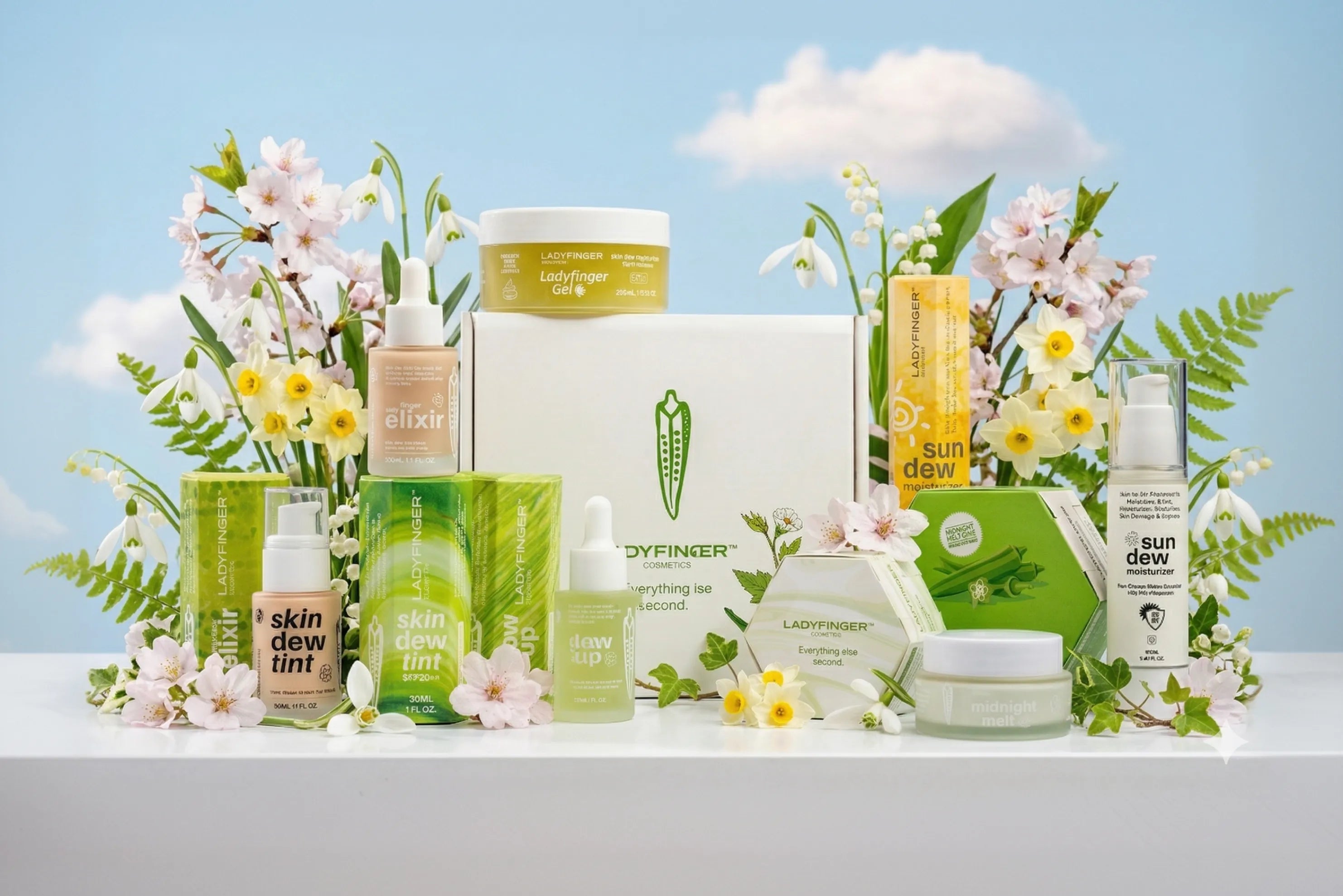
Sun Dew SPF 50 was formulated specifically for Pakistani climate — no white cast on South Asian skin tones, doubles as a moisturizer (so it actually reduces your step count), and uses hybrid UV filters for complete broad-spectrum protection. It's why it became our fastest-growing product.
How to Apply SPF Correctly
- Amount: Most people apply 20–50% of what's needed. Use 2–3 pumps for the face alone. If it feels like a lot — it's probably the right amount.
- Timing: Apply as your last skincare step, before makeup. After moisturizer, after serum, after everything else.
- Reapplication: Reapply every 2 hours if you're outdoors. Once in the morning is sufficient for an indoor day. For outdoor activities — reapply. Non-negotiable.
- Order matters: SPF after moisturizer, not mixed in. Diluting sunscreen reduces its protection factor.
The Bottom Line
Every rupee you spend on brightening serums, night creams, or any active treatment is cut in half if you skip daily SPF. Sunscreen is not optional skincare — in Pakistan, in summer, it's the foundation every other product rests on.
Start here: Sun Dew SPF 50 — PKR 1,919 at ladyfingercosmetics.com
Also read: Best Brightening Serum for Hyperpigmentation in Pakistan | Niacinamide vs Vitamin C for Dark Spots
Shop the fix: Sun Dew Moisturizer